
Introduction
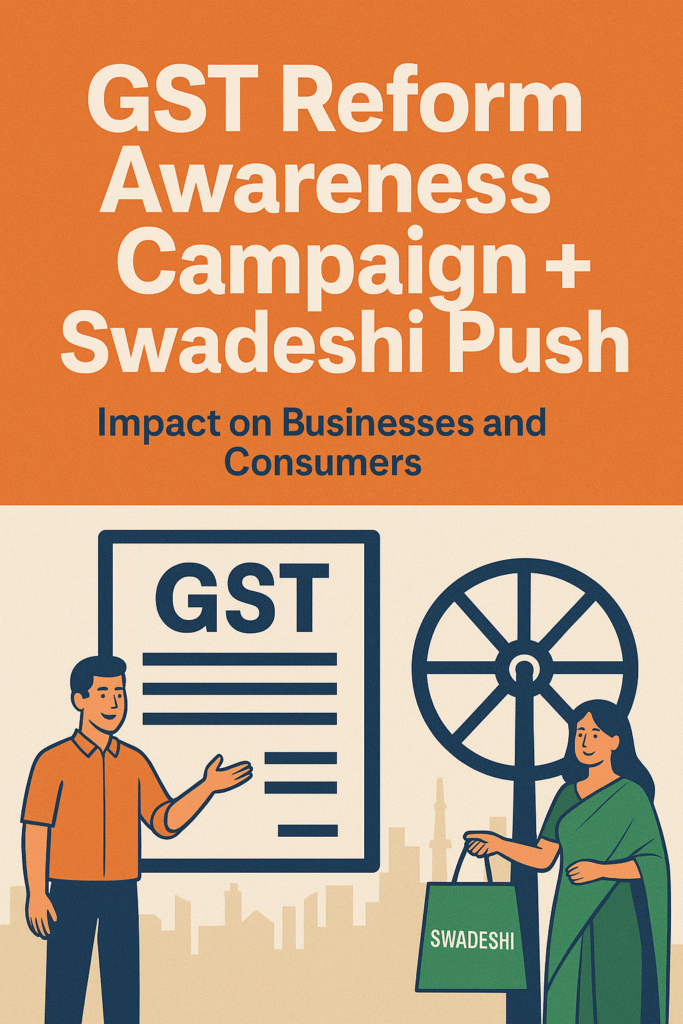
India stands at a historic turning point in its economic journey. The government has initiated the GST Reform Awareness Campaign + Swadeshi Push, not only to simplify taxation but also to strengthen India’s self-reliance movement. These two forces—tax reform and Swadeshi revival—are interlinked in creating a transparent, fair, and sustainable economy.
This blog explores in detail the need, awareness strategies, business impacts, consumer benefits, challenges, and long-term outcomes of the GST reform awareness campaign combined with the Swadeshi push.
1. Understanding GST Reforms in India
GST was introduced to unify multiple indirect taxes under one system, making trade seamless across states. The reforms focus on simplification, reducing tax evasion, and boosting ease of doing business. However, constant amendments require strong awareness among taxpayers to stay compliant. Awareness ensures transparency and efficiency.
2. Why Awareness Campaigns Are Critical
Despite GST’s benefits, many small traders and MSMEs struggle to understand filing procedures. Awareness campaigns bridge this gap, prevent penalties, and empower entrepreneurs. The campaigns also align with Digital India, providing digital literacy to rural traders.
3. Swadeshi Push: Reviving Local Economy
The Swadeshi push encourages Indians to buy local products. It aligns with Atmanirbhar Bharat and Make in India. Through GST transparency, Swadeshi products gain more trust and competitiveness. Local artisans, startups, and agriculture-based enterprises benefit the most.
4. GST Reform Awareness Campaign + Swadeshi Push: A Combined Movement
The government combines tax awareness with the Swadeshi push to maximize impact. Transparent GST builds consumer trust in Indian products, while Swadeshi branding supports domestic industries. This combined movement creates economic patriotism and sustainable growth.
5. Impact on Businesses
SMEs gain market access but need compliance training. Corporates align with Make in India and benefit from simplified taxes. Startups enjoy better investor confidence due to transparent systems. Awareness campaigns reduce resistance and build confidence in compliance.
6. Impact on Consumers
Consumers benefit through transparent pricing and fair taxation. They are encouraged to purchase local products, contributing to national development. Awareness campaigns educate consumers about GST invoices and their rights.
7. Role of Digital Platforms in Awareness
Digital campaigns on social media, YouTube, and regional apps spread GST knowledge quickly. Government portals and trade associations conduct workshops. Digital tools ensure wider reach and effectiveness.
8. Challenges in Implementing GST Awareness + Swadeshi Push
Challenges include literacy gaps, digital divide, and misinformation. Traders often resist change due to compliance fear. Additionally, fake Swadeshi labeling on imports dilutes consumer trust. Campaigns must tackle these strategically.
9. Case Studies & Examples
Example: A textile MSME improved profits after GST compliance and Swadeshi branding. Example: An e-commerce startup selling handicrafts saw growth after integrating GST billing and marketing local products. Consumers in campaigns reported higher trust in Indian goods.
10. Future of India with GST Reform Awareness Campaign + Swadeshi Push
Long-term, this campaign boosts India’s tax revenue, job creation, and global competitiveness. With Swadeshi push, India strengthens its identity as a self-reliant economy, fostering pride and sustainable development.
Conclusion
The GST Reform Awareness Campaign + Swadeshi Push is more than just policy. It reshapes India’s economic culture by linking compliance with patriotism. Businesses benefit through growth, consumers gain transparency, and the nation steps closer to Atmanirbhar Bharat.
